Posts

The Warming Earth - 2015 temperatures.

Image
The Earth is going through an extraordinary process.... the planet is warming, the ice is melting, and the climate is changing. There hasn't been a new coldest year for over 100 years, as you'll see if you click here and watch the video In 2015 , the warming trend continued. The year  2015  ranks as Earth’s warmest year since records began in 1880. This is reported by scientists from NASA and the National Oceanic and Atmospheric Administration.   The average surface temperature has risen  about 1.0 degree Celsius  since the late-19th century. Globally-averaged temperatures in 2015 beat the previous record set in 2014 by  0.13 degrees Celsius .  NASA analysis estimates 2015 was the warmest year with 94% certainty. Most of the warming occurred in the past 35 years, with 15 of the 16 warmest years on record occurring since 2001. 2015 was the first time the global average temperature was 1 degree Celsius or more above ...

The Warming Earth - The Warmest Winter

Image
The northern hemisphere  winter  , December 2014 to February 2015, was the warmest in the records,  according to NASA. The average temperature, taken for northern land and ocean surfaces, was  1.42°F (0.79°C) above the 20 th   century average.  This was the highest for December, January and February in the 1880–2015 record, passing the previous record of 2007 by 0.05°F (0.03°C).

The Warming Earth - 2014 - Warmest Year in Modern Record

Image
The year  2014  ranked as Earth’s warmest since records began in 1880 - until it was beaten by 2015. This was reported by scientists from NASA and the National Oceanic and Atmospheric Administration. 9 of the 10 warmest years in the  instrumental record have now occurred since the year 2000. The exception was 1998, which was affected by a very strong  El Nino  event. That means nobody born since 1976 has experienced a colder-than-average year. 2014 was not even affected by an  El Nino,  which has been the case for previous record years. For a more complete picture of 2014, there is a detailed report:   State of the Climate 2014.

The Warming Earth - Why are some years still cooler than the year before?

Image
The Earth is a very complicated planet. Where does the heat of global warming go?  Heat can affect things without causing a temperature rise. Extra heat can be used in ‘ changing state ’ instead of raising temperature. A change of state could be … a  solid  melting to a  liquid .  Or a  liquid  evaporating to a  gas . So heat is needed to change ice at zero degrees C to water at zero degrees C. And to change water into water vapour….. without raising the temperature. Scientists call the heat used to change state  latent heat. Also, there are natural variations in the global climate,  El Nino  events being the ones that affect world temperature the most. The opposite to 'El Nino' is 'La Nina', a cooling effect. If global temperatures are plotted on a graph in a way that shows these variations, it makes the overall warming trend very obvious. Every La Nina year since 1998 has been warmer than every El Nino...

The Warming Earth - Climate change is making animals move.

Image
Animals are reacting to climate change very quickly. Some move to higher places, others move north or south. Dragonflies love warmer temperatures. UK dragonflies have mainly stayed in the south of the country, until recently. Ruddy Darter ( Sympetrum sanguineum ) Since 1980, 34 out of the 37 British species of dragonfly have expanded their range northwards by an average of 74km. That is over 2km per year..... nearly 6 metres per day. For example, the  ruddy darter  ( Sympetrum sanguineum ) and the  hairy dragonfly , ( Brachytron pratense ), have moved into north-west England.  This is evidence that the UK’s climate is growing warmer. "So much has happened to  dragonflies  in Britain since the 1990s that there is a most compelling case for the Government to adopt them as indicators of climate change", said Steve Brooks . He is a London Natural History Museum research entomologist, with a special interest in the response of fresh...

The Warming Earth - Was an Ice Age predicted in the 1970s?

Image
It seems to be a common saying..... but it's very misleading. " Why are scientists talking about global warming?  In the 1970s they were warning us an Ice Age was coming.   They can't expect to be taken seriously if they keep changing their minds ."   It's not as simple as that   ... and science has learned a lot since the 1970s. Glaciers have certainly not advanced.... the opposite, in fact. Muir Glacier, Alaska. Left: August 13, 1941. Right: August 31, 2004. Credit: 1941 photo taken by Ulysses William O. Field; 2004 photo taken by Bruce F. Molnia. Courtesy of the Glacier Photograph Collection, National Snow and Ice Data Center/World Data Center for Glaciology. So why does this story keep appearing in so many places? The magazine  "New Scientist"  has looked at this myth…. 1970s "ice age myth" From the article - A survey of the scientific literature has found that between 1965 and 1979,  44 scientific papers predicted...

The Warming Earth - What share of warming is caused by human activity, and what is the risk?

Image
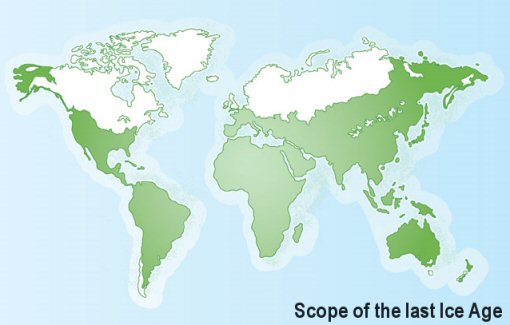
What share of climate change is caused by human activity? Scientists at the  Geological Society of London  say - All the current rise in temperature is caused by human activity. How has this been discovered? The key is found in looking at the evidence of the Ice Age. The 'Ice Age' is actually a long set of colder (glacial) stages and warmer (interglacial) stages. The last major glacial stage of the "Ice Age" ended thousands of years ago. Since the ice melted back, the temperature has changed, but the recent rise is very different. The graph  shows that after the ice melted, temperatures continued to rise for a few thousand years. Around 10,000 years ago the global temperature steadied (with some 'wiggles') until about 5,000 years ago. Then the Earth began to slowly cool,  and that continued until modern times, with some variations. So  left to itself the Earth would be cooling  towards a new glacial stage. Glacial stages are lin...